

BLOG - FINANCIA
Geopolitical Flashpoints of 2025 and Their Shockwaves in Global Markets
As of mid-May 2025, the global financial landscape is shadowed by intense geopolitical tensions. War and rivalry are reshaping trade patterns and rattling investors’ nerves. A confluence of conflicts, from battlefields in Eastern Europe to standoffs in Asia, is disrupting commodities, fueling inflationary pressures, and challenging assumptions built on decades of globalization. Policymakers and market participants alike are grappling with a world in which political fractures threaten to upset financial stability. The International Monetary Fund’s chief economist recently warned that “the global economic system that has governed the past eighty years is being reset,” with the Fund trimming its 2025 growth forecast to 2.8% in a “sobering signal of the mounting costs of economic fragmentation”. Investors with international portfolios are increasingly attuned to these geopolitical flashpoints, knowing that regional wars or diplomatic rifts can send shockwaves across asset classes, from oil and wheat prices to equities and foreign exchange. In this environment, geopolitics is no longer an externality but a central driver of market sentiment and strategy.
FINANCIAL MARKETS
Mathéo Bockel
5/15/202525 min read
The Russia-Ukraine War and a Global Energy Shock
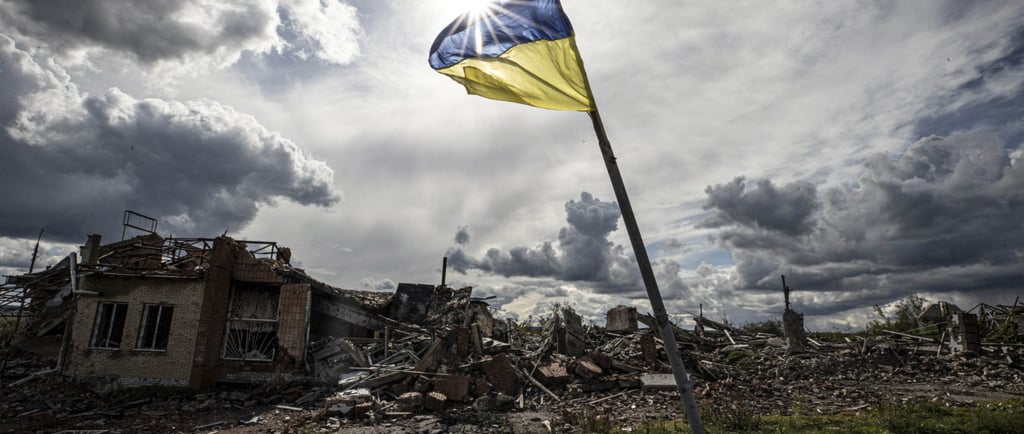
Europe’s largest land war since 1945 rages on in Ukraine, with no clear end in sight. Beyond its devastating humanitarian toll, Russia’s invasion has upended global markets and triggered what energy experts call the first truly global energy crisis. In the immediate wake of the February 2022 attack, prices for oil, natural gas, and coal skyrocketed to record levels, sending shockwaves through economies worldwide. Two years later, by early 2024, energy costs had eased off their peaks but remained painfully elevated in many regions, holding back growth, straining household finances, and keeping markets on edge amid unusually high geopolitical uncertainty. The conflict severed decades-old energy ties: Europe scrambled to replace Russian pipeline gas, dusting off coal plants and hastening investments in renewables, while Moscow pivoted oil exports toward Asia at discounted prices. Trade patterns for crucial fuels have shifted dramatically since the war began, underscoring a new priority for governments and investors alike: energy security.
The Russia-Ukraine war’s impact extends far beyond energy. Although Russia and Ukraine made up only about 1.9% of world GDP combined before the war, they punched far above their weight in commodity markets. Together the two countries are key exporters of wheat, corn, sunflower oil, fertilizers, lumber, and important metals like nickel, aluminum, and palladium. The outbreak of war disrupted these supplies virtually overnight. By mid-March 2022, a broad index of raw material prices had spiked 33% year-to-date to all-time highs. The surge fed directly into global inflation: consumer prices worldwide jumped 6.4% in 2022, the highest rate since the mid-1990s, largely because the war drove up costs for fuel, food, and other essentials. Europe was especially hard hit due to its reliance on Russian energy. As much as 45% of the European Union’s natural gas and coal imports, and a quarter of its oil, came from Russia before the war. The cutoff of these supplies sent European gas prices to historic extremes and pushed eurozone inflation into double digits at times. Central banks responded by tightening monetary policy aggressively, adding to market volatility. Investors saw European growth falter while U.S. exporters of LNG and weapons found new opportunities.
Even in 2025, the conflict’s imprint on markets persists. Energy prices remain a primary transmission channel of war risk into inflation and growth. Any major shift on the battlefield or in sanctions policy can jolt oil and gas markets. For instance, renewed Russian attacks on Ukraine’s energy infrastructure or a disruption in Black Sea oil shipping routes could send crude prices sharply higher again, threatening to reignite global inflation just as it was cooling. Conversely, talks of ceasefire or peace, however remote they seem currently, tend to pull commodity prices down on hopes of supply normalization. Beyond hydrocarbons, the war also periodically rattles agricultural markets; Ukraine’s ports are critical for grain exports to Africa and Asia, and Russia is a top fertilizer supplier. Every negotiation over “grain corridor” access in the Black Sea is closely watched by commodity traders. Meanwhile, risk aversion tied to the war has driven flows into traditional safe havens like the U.S. dollar, which in 2022 strengthened on war-related flight-to-safety flows. This dynamic has eased somewhat, but the dollar remains well-supported by America’s status as a net energy exporter and an island of stability amid European turmoil. All told, the protracted conflict in Ukraine continues to cast a stagflationary pall over markets, supporting commodities and safe-haven assets, while suppressing risk appetite and complicating central banks’ fight against inflation.
Middle East Tensions Whipsaw Oil and Safe Havens
Geopolitical tremors in the Middle East, the world’s hydrocarbon heartland, have kept investors on a knife’s edge through 2025. In late 2023 and into 2024, the Israel–Hamas war in Gaza delivered a stark reminder of how quickly regional conflict can stir global markets. Oil prices jumped and global equities wobbled in the immediate aftermath of the fighting, though the direct impact was contained as the conflict remained localized. By early 2025, however, investor focus shifted to a potentially far more perilous standoff: Iran’s nuclear ambitions and the risk of an Israeli or U.S. strike on Iran. These fears came to a head in May 2025 when CNN reported that Israeli leaders were preparing for a possible military strike on Iran’s nuclear facilities, based on U.S. intelligence leaks. The reaction was instant. Crude oil surged as traders grappled with the prospect of a broader war in the Persian Gulf. The Middle East still supplies roughly one-third of the world’s oil, and any conflict involving Iran, including potential disruption of the Strait of Hormuz, a choke point for 20% of global oil shipments, could produce a severe supply shock. In the same news-driven spike, traditional safe havens like the Swiss franc and Japanese yen also climbed temporarily, reflecting investors’ impulse to seek refuge from gathering war clouds.
Over the ensuing days, mixed headlines whipsawed sentiment. On one hand, reports emerged that backchannel U.S.-Iran talks on reviving the nuclear deal were still alive, which could lead to sanctions relief and more Iranian oil hitting the market later in the year. On the other, hardliners traded threats, and Israeli warplanes were reported to have conducted limited airstrikes in Syria (presumably targeting Iran-linked assets), stoking speculation of a direct Israel-Iran clash. Financial markets swung with each turn of the screw: oil futures were volatile, at one point spiking above $75 per barrel before retreating as diplomatic efforts regained traction. By mid-June 2025, relative calm returned to global markets when news broke that Iranian officials were open to restarting nuclear negotiations. As fears of an all-out Iran–Israel war subsided, stocks rallied, while oil prices sank back and even gold gave up its brief war-premium gains. The S&P 500 jumped about 1% in a single day on June 16, 2025, as investors pivoted back to “risk-on” mode. West Texas Intermediate crude, which had spiked early that session, settled down near $72 a barrel on hopes that Middle East supply would remain uninterrupted.
This roller coaster underscores how the Middle East’s geopolitical risk premium operates in real time. Markets tend to price in worst-case scenarios swiftly, sending energy prices higher and boosting safe havens, but can just as quickly rebound if those scenarios are averted. Indeed, in the 2025 Iran scare, hostilities ended quickly in June without a major oil supply disruption, sparing the global economy from a severe energy shock. Yet the episode was a fire drill for what could happen if diplomacy fails. Analysts at the Federal Reserve Bank of Dallas ran scenarios on a hypothetical Iran war: even a brief conflict that kept oil flowing would nudge U.S. headline inflation a few tenths of a percent higher, while a severe scenario like a Strait of Hormuz closure could send oil to $100 and add more than a full percentage point to U.S. inflation in late 2025. Such outcomes, while low-probability, are the kind of tail risks portfolio managers must contemplate.
Beyond Iran, the Middle East hosts other smoldering flashpoints that can flare up. Yemen’s civil war has drawn in major powers and threatened Red Sea shipping lanes in the past (missile attacks on oil tankers have occurred). Syria remains unstable, and Iraq faces periodic unrest, any of which could affect oil output. Even the relatively dormant tensions between Saudi Arabia and Iran bear watching despite their China-brokered diplomatic rapprochement in 2023. Meanwhile, OPEC+ policy adds another geopolitical layer: producers led by Saudi Arabia and Russia carefully calibrate output to manage prices, and their cohesion has at times been tested by politics (for instance, U.S.–Saudi relations grew frosty over oil cuts). For investors, the key takeaway is that geopolitical risk in the Middle East exerts an asymmetric influence: it tends to put a floor under oil prices and can unleash sudden spikes, whereas positive developments (peace deals or ceasefires) usually only gently ease prices lower. That dynamic means energy traders keep a permanent risk premium priced into oil. It also means that asset classes from currencies to equities can experience bursts of volatility when Middle Eastern tensions boil over, even if those moves later reverse. In an era of already high inflation, even modest oil price flares can complicate the outlook for interest rates and growth. Little wonder that geopolitical turbulence in the Middle East remains a top concern for financial markets, second only to the war in Ukraine in its capacity to destabilize the global economic equilibrium.
Washington vs. Beijing: Trade War, Tech Decoupling, and Investment Uncertainty
The great power rivalry between the United States and China, the world’s two largest economies, has increasingly taken center stage for investors assessing geopolitical risk. By 2025, this multifaceted conflict spans trade policy, technology standards, financial linkages, and military posture in East Asia. Under the Trump administration, which returned to office in January 2025, Washington dramatically escalated the economic pressure on Beijing and others, turning simmering tensions into an outright trade war. In early April 2025, dubbed “Liberation Day” by the White House, President Trump unveiled sweeping tariffs on virtually the entire world, including allies, in a bid to reorient supply chains. The result was global market turmoil. Import taxes were hiked to their highest levels since the 1930s, shocking businesses and investors who had grown accustomed to relatively free trade. Stocks sold off worldwide in the immediate aftermath of the tariff blitz, reflecting fears of higher costs and slower growth. U.S. trading partners scrambled to negotiate exemptions or new deals: within months, many countries from the EU to Japan struck frameworks to cap tariffs, yet uncertainty remained rife, especially regarding China, which pointedly failed to reach a final trade agreement with Washington in 2025.
The economic decoupling between the U.S. and China accelerated on multiple fronts. By late 2025, China had been dislodged as America’s top trading partner, a title now held by Mexico, as U.S. imports of Chinese goods fell sharply, from 22% of its import mix in 2018 to only 13% by 2023. In place of Chinese suppliers, U.S. companies turned to “friend-shoring” arrangements, sourcing more from allies like Vietnam, India, and Latin America. This realignment has profound implications for investors: it suggests a long-term reworking of global supply chains, with potential increases in production costs and duplication of capacity. A concrete example is the semiconductor sector, where U.S. export controls on advanced chips have forced Chinese firms to seek domestic or non-Western alternatives, while U.S. and Taiwanese chipmakers invest in new fabs in America and Europe for security reasons. In March 2025, Washington tightened the screws further by blacklisting dozens of Chinese tech entities, effectively barring them from cutting-edge U.S. semiconductor technology. Beijing has retaliated in kind, from restricting exports of critical minerals like rare earths to raiding and investigating American consultancies operating in China. These tit-for-tat measures have injected volatility into technology stocks and cast a cloud over cross-border investment flows in the tech industry.
Financial markets have been buffeted by the ebbs and flows of the U.S.–China confrontation. For example, tariff announcements in 2025 initially sent equity markets sharply lower and boosted the dollar, as global investors braced for slower growth and sought safety in U.S. assets. Multinational companies with supply chain exposure to China, especially in sectors like electronics, apparel, and machinery, saw their share prices swing with each hint of détente or escalation. When talks between Trump and Chinese President Xi Jinping failed to produce a comprehensive accord by late 2025, markets reacted warily, pricing in a drag on earnings for firms caught in the crossfire. Yet amid the chaos, there were also relative winners: some emerging markets gained export orders as suppliers diversified away from China, and shares of U.S. defense and infrastructure companies benefited from government spending tied to strategic competition with Beijing. Notably, China’s economy, while dented by tariffs, proved resilient in surprising ways. Chinese exports hit a record surplus of over $1 trillion in 2025 by redirecting goods to non-U.S. markets and moving up the value chain. Moreover, China leveraged its dominance in certain materials, for instance, rare earth elements essential for high-tech manufacturing, to push back against Western pressure, reminding investors that Beijing retains powerful cards in this conflict.
Beyond trade and tech, the geopolitical rivalry has a military dimension that, if it escalated, could be even more disruptive to markets. The flashpoint of most concern is Taiwan. Thus far, cooler heads have prevailed – analysts generally assign low probability to a near-term armed conflict over Taiwan, and indeed as of 2025 the Taiwan Strait has seen rising tensions but no direct military clash. Nonetheless, Beijing’s military drills and Washington’s naval patrols in the South China Sea create periodic headline risk. Every time there is an incident, say, a close encounter between U.S. and Chinese warships, markets experience a momentary flutter as traders contemplate the unthinkable. The consensus is that all sides recognize the catastrophic economic fallout of a war over Taiwan, given that the island is a linchpin of the global semiconductor supply and that a U.S.–China military conflict would sever countless trade and financial links. This keeps an uneasy peace, but also forces investors to price in a persistent geopolitical risk premium, especially in Asia-Pacific assets. In 2025, for instance, South China Sea territorial disputes led to heightened “gray-zone” confrontations (coast guard standoffs, sanctions on fishing fleets) rather than open warfare, in line with forecasts. That kind of tension is enough to make regional investors cautious but not panic-stricken.
In sum, the U.S.–China strategic rivalry is rewriting the rules of global commerce. What had been a tailwind of globalization for markets is turning into a headwind of fragmentation. Tariffs, export controls, sanctions on companies (from telecom giants to chipmakers), and restrictions on investment are creating parallel economic systems. The year 2025 may well be remembered as the point when decoupling stopped being theoretical and became reality. For investors, this means adjusting to a world of higher costs and more friction, but also new opportunities as supply chains shift and new spheres of influence emerge. It is telling that the IMF estimates a full bifurcation of the global economy into U.S.-led and China-led blocs could, in the long run, shave 2.5% to 7% off global GDP – a loss measured in trillions of dollars. Little wonder that IMF officials are warning of a potential “new Cold War” if fragmentation deepens. The stakes for markets are enormous: whether it is multinational companies reconfiguring operations, currencies adjusting to new trade flows, or entire stock indexes being reshaped by industrial policy (e.g. massive subsidies for chip production in the U.S. and Europe), the U.S.–China conflict will remain a defining macro theme for the foreseeable future.
India and Pakistan: Nuclear Neighbors on a Hair Trigger
South Asia’s perennial rivalry entered a dangerous new phase in spring 2025, sending ripples of concern through regional markets. In early May, India and Pakistan engaged in their worst fighting in decades, a sudden flare-up that reminded the world that two nuclear-armed states stand ever at the brink. The crisis was triggered by a militant attack in Indian-administered Kashmir (the deadliest such incident since 2019) which India blamed squarely on Pakistan-backed extremists. Within days, New Delhi launched “retaliatory strikes” on Pakistani territory on May 7, 2025, in a campaign codenamed Operation Sindoor. Unlike previous episodes that were relatively contained, this time Indian warplanes hit deep into Pakistan, and Islamabad responded with unusually forceful measures, including cross-border artillery fire and unverified reports of drone attacks on Indian military sites. For a tense week, the specter of a full-scale war loomed over the subcontinent.
Financial markets in India and Pakistan reacted swiftly to the brinkmanship. The Indian rupee weakened from 84.0 to 85.8 per US dollar in the immediate aftermath, as currency traders priced in a geopolitical risk premium. At the same time, volatility spiked in the INR forward markets, and option contracts showed a bias for further rupee weakness (a sign that investors were hedging tail risks). Equities also sold off: Mumbai’s Sensex index fell about 1.4%, a relatively modest drop but noticeable in a market that had been rallying, while Pakistan’s Karachi stock exchange plunged nearly 7% at one point amid fears of broader instability. Yields on India’s 10-year government bonds crept up by 10 basis points, a reflection of both risk aversion and concerns that war spending or oil supply disruption (India imports much of its oil) could worsen India’s fiscal and inflation outlook. By contrast, global markets mostly took the South Asia clash in stride, treating it as a regional crisis unlikely to spiral into great-power conflict. There was a modest uptick in gold and perhaps a knee-jerk dip in emerging market stock ETFs, but nothing like the convulsions seen during larger geopolitical shocks.
Indeed, a week later, the worst-case scenario was averted. Intense behind-the-scenes diplomacy, reportedly involving Washington, Beijing, and Riyadh, helped persuade both New Delhi and Islamabad to stand down after a few days of muscle-flexing. Neither side was prepared to risk uncontrolled escalation. Analysts noted that both countries had powerful incentives to de-escalate. India, enjoying rapid economic growth and courting foreign investment, did not want to scare off multinational companies by appearing war-prone. The Modi government has been marketing India as the next big manufacturing hub (especially as Western firms diversify from China), and a protracted conflict would have severely undermined that narrative. Pakistan, for its part, was in the midst of an IMF-supported economic stabilization program and could ill afford a war. Its fragile economy, only recently pulled back from the brink of a balance-of-payments crisis, depended on continued international aid and a measure of political calm. In short, neither side could “win” a prolonged confrontation, and wiser heads prevailed.
For investors, the May 2025 Indo-Pakistani scare offered a familiar lesson: historically, market impacts of India–Pakistan clashes have tended to be short-lived. Barring a full-blown war (which both sides have avoided since 1971), the pattern has been that local markets sell off briefly during the crisis, only to recover in the ensuing months. MUFG Bank’s strategists point out that even after serious episodes, like the Kargil War in 1999 or the Balakot airstrike crisis in 2019, Indian equities and the rupee typically stabilized and rebounded within weeks, often reaching new highs within a year of the conflict. This resilience reflects both the limited duration of past skirmishes and the global tendency to “look through” South Asian geopolitical noise unless it reaches cataclysmic proportions. However, MUFG also cautioned that “history is an imperfect proxy and this time could well be different”. The 2025 episode saw a greater military response than previous terror-related clashes, suggesting a dangerous new normal. The presence of nuclear weapons imposes restraint but also raises the stakes immeasurably if miscalculations occur.
From a market perspective, a major Indo-Pakistani war would be a tail risk event with potentially far-reaching consequences. South Asia is home to a combined 1.6+ billion people and is a growing economic engine; a war could disrupt supply chains (India is a pharmaceutical and IT powerhouse, Pakistan a key textile producer) and spur a refugee crisis. It could also draw in external powers, for instance, China sides with Pakistan and might exploit an India distracted by conflict, while the U.S. and its allies would back India, introducing new geopolitical fractures. Oil prices could rise if shipping through the Indian Ocean or Persian Gulf is affected, and safe havens would certainly catch a bid. For now, such scenarios remain hypothetical. The base case is that periodic border crises will flare and then dissipate, causing only transient market wobbles. Nonetheless, the spring 2025 crisis underscored why investors in emerging markets demand a risk premium: geopolitical eruptions can happen with little warning, and positions in currencies or stocks can move violently for reasons unrelated to fundamentals. Prudence dictates closely monitoring South Asia’s simmering rivalry as part of any comprehensive risk assessment.
Conflict in Africa: Local Wars, Global Ripples
While conflicts in Africa often receive less attention from global investors, they form a crucial piece of the geopolitical risk puzzle, especially where they intersect with commodities and great-power competition. Africa in 2025 is home to several simmering wars and civil strife, from the Sahel to the Horn of Africa, each with mainly regional impact but some notable global implications. Perhaps the most strategically significant is the ongoing conflict in the eastern Democratic Republic of Congo (DRC). This resource-rich region has been plagued by fighting involving rebel groups (like the M23 militia) and meddling by neighboring states. What makes the DRC’s turmoil a global concern is minerals: the country is home to about 72% of the world’s cobalt reserves and over 70% of global cobalt supply, not to mention vast deposits of copper, lithium, and other critical minerals. Cobalt, in particular, is a key component in electric vehicle batteries and other high-tech applications. Thus, when conflict threatens to shut down mines or transport routes in the DRC, it sends tremors through the EV supply chain. In late 2025, the United States helped broker a tentative peace deal between the DRC and neighboring Rwanda, linking security efforts with plans to open up Congo’s minerals to Western markets, in a bid to counter Chinese dominance in African mining. Yet implementation lagged and renewed fighting erupted even after the deal was signed, undercutting hopes of stability. For markets, the episode highlighted that sourcing of critical minerals is now as much a geopolitical endeavor as an economic one. Western governments and companies are racing to secure “friendly” supplies of cobalt, nickel, and rare earths, aiming to reduce reliance on any single foreign actor. As Reuters reported, the U.S. is effectively in a “fierce contest with China to secure minerals”, exemplified by its plan to take an equity stake in Congo’s cobalt marketing venture to gain preferential access for U.S. buyers. This great-power jostling over African resources means that local conflicts can carry outsized weight in boardrooms from Detroit to Tokyo.
Another locus of concern is the band of countries across West and Central Africa that experienced a wave of coups and insurgencies in recent years. In 2023, military juntas seized power in Mali, Burkina Faso, and Niger – the latest, Niger’s July 2023 coup, had an interesting commodity angle. Niger supplies around 15% of France’s uranium and roughly one-fifth of the European Union’s total uranium imports. When its new regime suspended exports to France, it raised alarms about nuclear fuel supply for Europe’s reactors. While French officials downplayed immediate impacts, France holds strategic uranium inventories and diversified sources, the situation laid bare Europe’s vulnerability. It also underscored a broader trend: as the EU tries to wean itself off Russian energy (including uranium) due to the Ukraine war, instability in alternative supplier nations can thwart those efforts. So far, the Niger disruption has not appreciably moved uranium prices, and global uranium production (Kazakhstan, Canada, etc.) can likely fill gaps. But the coup has complicated Western sanctions strategy against Russia’s state nuclear company, given the need to keep all options open for uranium sourcing. More broadly, the Sahel region’s turmoil, including ongoing battles with jihadist groups and the emergence of Wagner Group mercenaries (linked to Russia) in places like Mali, has geopolitical underpinnings. It has led to a realignment where countries like Mali and Burkina Faso pivot away from Western partners and toward Russia or China for security and investment. Investors in industries such as gold mining (Mali is a major gold exporter) have had to navigate abrupt regime changes and rising resource nationalism in these nations. The direct global market impact of any single African conflict may be limited, often more humanitarian in scope, but the cumulative effect of a fragmenting African political landscape is added uncertainty in supply chains for raw materials and potential new fronts in the competition between East and West.
Elsewhere, parts of the Middle East/North Africa region also tie into the African geopolitical tapestry. Sudan, straddling the Arab and African worlds, descended into a brutal internal war in 2023 when rival military factions clashed. By 2025, fighting in Sudan’s capital and Darfur region had devastated the economy and created a refugee crisis, with spillover risks to neighboring Egypt, South Sudan, and Ethiopia. The global economic impact of Sudan’s war has been relatively contained, Sudan is not a major oil producer (unlike past conflicts that threatened oil flows, such as Libya’s civil war). However, Sudan is a significant exporter of gum arabic (vital for the food industry) and a transit point on the Red Sea. Prolonged instability there could, for example, pose piracy or terrorism risks along shipping routes between the Suez Canal and the Indian Ocean. Farther west, Nigerian, Africa’s largest economy and a major oil producer, grapples with its own security challenges (militant attacks in the Niger Delta, Islamist insurgency in the northeast). Any serious disruption to Nigerian oil output can affect global crude benchmarks, although to date Nigeria has managed to keep production broadly steady even amid unrest.
In assessing Africa’s conflicts from an investor standpoint, it is useful to distinguish between localized economic effects and global knock-on effects. Many conflicts mainly affect the host country or immediate neighbors, for instance, Ethiopia’s civil war (2020–2022) hurt its growth and some supply routes but had little systemic impact globally. However, when the violence intersects with globally traded commodities or great-power interests, it can amplify into something markets must heed. The competition for Africa’s critical minerals is a prime example: it links Congolese rebel activity or Zambian politics with the share price of a Tesla or the strategic stockpiling decisions of China’s state metals reserve. Another example is food security: conflicts in African breadbasket nations (like a hypothetical resurgence of war in Sudan’s agricultural heartland, or climate-driven clashes in Kenya’s farm regions) could tighten world food supplies and add to inflation elsewhere. So far in 2025, Africa’s various conflicts have not caused a major global market crisis, but they contribute to the climate of geopolitical fragmentation. The proliferation of unstable regions offers openings for rival powers to extend influence (Russia via arms and mercenaries, China via loans and mining deals, the West via sanctions and aid), effectively making African stability a piece on the global chessboard. Investors are increasingly aware that political risk is not confined to the G7 vs. China/Russia narrative; it also lurks in emerging and frontier markets, requiring careful due diligence. Those with interests in commodities, especially, are paying close attention to conflict early-warning indicators in Africa, knowing that a coup or war in the “Global South” might be one supply shock away from hitting commodity futures or disrupting an internationally integrated business.
Fragmentation and Decoupling: The New Economic Order
Above all these individual conflicts looms a broader trend: the world is moving from an era of ever-increasing integration to one of geopolitical fragmentation and economic decoupling. The post-Cold War assumption that globalization is irreversible has been upended. In its place, a new paradigm is emerging – one defined by rivalry, realpolitik trade arrangements, and the formation of economic blocs based on political alignment rather than pure market efficiency. For investors and multinational companies, this is a sea change. The efficiencies of global supply chains, the predictability of a U.S.-led international order, and the ubiquity of the dollar-centric financial system are all being called into question at the margins as countries prioritize national security and resilience over interdependence.
The signs of fragmentation are everywhere. Trade barriers are on the rise: nearly 3,000 trade restrictions were imposed worldwide in 2022 alone, almost three times the number from just a few years earlier. Strategic sectors like semiconductors, telecommunications, energy, and pharmaceuticals are seeing especially intense protectionism. Major economies are reshoring manufacturing of critical goods or “friend-shoring” supply chains to allied nations. The United States has passed sweeping industrial policies (such as the CHIPS Act and Inflation Reduction Act) explicitly designed to reduce dependence on Chinese inputs and to secure domestic capacity in batteries, chips, and green technologies. China, for its part, is doubling down on self-reliance in technologies like aerospace and computing, while also using its financial clout to build parallel institutions (e.g. the BRICS Bank, the Belt and Road Initiative) that lessen reliance on Western-dominated systems. This is not a full retreat from globalization – international trade and investment still thrive in many areas – but, as IMF’s Gita Gopinath put it, “fault lines are emerging” and geoeconomic fragmentation “is increasingly a reality”. She warns that if the world divides into two blocs, broadly, a U.S./EU-led sphere and a China/Russia-led sphere, the losses in efficiency, innovation, and growth could be enormous, potentially reversing “nearly three decades of peace, integration, and growth”. In purely economic terms, one IMF study estimates that such a bifurcation could shave off up to 7% of global GDP in the long run. This sobering figure underscores why fragmentation is perhaps the defining macro risk of our time: unlike a temporary shock, it represents a structural change in the backdrop against which all financial decisions are made.
One of the clearest manifestations of decoupling is in the technology realm. The U.S.–China tech split has already been discussed, but it fits into a larger pattern of technological spheres. Competing systems are developing for everything from 5G networks to payment systems. Think of how Western countries banned Huawei’s 5G equipment, or how China’s UnionPay and digital yuan are being promoted as alternatives to Visa/Mastercard and the dollar SWIFT network in certain regions. Russia’s ostracism from much of the global financial system after its Ukraine invasion, including sanctions that froze its central bank’s assets, has accelerated efforts by various countries to create sanctions-proof payment channels. This includes using local currencies for trade (e.g. India buying Russian oil in rupees, or China settling commodities in yuan) and accumulating alternative reserve assets (like gold, which saw strong central bank buying). While the dollar remains overwhelmingly dominant (and, in fact, U.S. assets have proved attractive in times of uncertainty), the politicization of finance is a new risk factor. Countries worry that their economic links could be weaponized against them, as happened to Russia. As a result, we see gradual diversification: the gold price has been buoyant partly for this reason, and some emerging markets have increased holdings of non-dollar reserves.
Another angle to fragmentation is in multilateral cooperation, or lack thereof. Forums like the G20, once venues for coordinated action, have splintered into discord as great-power consensus evaporates. In 2025’s IMF and World Bank spring meetings, observers noted “widespread unease” and uncertainty as finance officials confronted a world economy under duress from “trade tensions and rising geopolitical strain”. The IMF Managing Director, Kristalina Georgieva, frankly stated, “We’re not in Kansas anymore,” emphasizing that the terrain is unfamiliar and treacherous. She implored nations to resolve trade disputes and restore confidence in the international system, even as she acknowledged deeper structural rifts. The difficulty, of course, is that trust among major powers is at a low ebb. As veteran economist Adam Posen has argued, “cross-border distrust among the big three economies” (the U.S., China, and the EU) is feeding a cycle of self-reliance demands and forcing smaller countries to “choose sides”. We see this in how advanced economies are courting developing countries with infrastructure deals (the West’s Build Back Better World vs. China’s Belt and Road), vaccine diplomacy during the pandemic, or more recently, courting critical mineral-rich countries with investment to secure their allegiance. The fragmentation is not only economic; it’s geopolitical through and through, a competitive, zero-sum mindset creeping into areas once governed by win-win multilateralism.
For markets, geopolitical fragmentation presents a paradox. On one hand, it raises costs and inefficiencies, which could be a drag on corporate profits and growth. On the other hand, it is fueling certain sectors: defense companies are seeing booming orders (as nations rearm in a less secure world), commodity producers have gained pricing power amid supply uncertainties, and governments are pouring money into infrastructure and technology to compete for self-sufficiency. So there are both negative and positive investment implications. The key risk is that fragmentation increases volatility and tail risks. In a tightly interconnected world, a crisis in one corner could be quickly cushioned by global buffers; in a fractured world, shock absorbers might fail. For example, a financial crisis in a country cut off from one bloc might not get timely help if it’s on the “wrong side” of a geopolitical divide. Or consider how “the largest economies’ increasing tendency to link access to their markets to political loyalty” is disrupting business decisions. When the U.S. or China conditions trade on geopolitics – be it sanctioning countries that deal with Iran, or China boycotting Australian commodities over political spats, it introduces new uncertainties in forecasting demand and supply. As Posen notes, this trend means all manner of economic access (exports, jobs in critical industries, capital flows) can be suddenly constrained for political reasons. For companies operating globally, that is a headache requiring scenario planning: supply chains might need constant re-routing; certain markets can vanish overnight due to sanctions; joint ventures may dissolve if partners fall afoul of their home governments. In short, geopolitical fragmentation is corroding the old assumptions of globalization, and investors must adapt to a world where political risk is a persistent factor, not an occasional anomaly.
Conclusion: Navigating Portfolios Amid Geopolitical Turbulence
In May 2025, the investing environment is defined as much by geopolitics as by traditional economic metrics. The significant conflicts and tensions, from the trenches of Donbas to the halls of power in Washington and Beijing, are not only humanitarian or diplomatic issues; they are market issues. Each flashpoint carries specific channels of impact: the Russia-Ukraine war drives energy and food inflation, the Middle East tinderbox injects an oil risk premium and safe-haven flows, U.S.-China decoupling reshapes supply chains and capital allocation, South Asian brinkmanship tests emerging market resilience, and African conflicts quietly influence critical commodity supplies. Beyond these, the overarching drift toward a less integrated world threatens to undermine the deflationary, low-risk backdrop that fueled asset prices for the last few decades. Instead, investors face a landscape of higher volatility, fatter tail risks, and the need for more vigilant risk management.
Yet, it is important to note that markets are adaptable. Thus far, global investors have often shrugged off short-term geopolitical shocks, a pattern evident in 2025 when, for example, equity indices rebounded quickly after initial sell-offs on war scares. Companies and portfolios adjust to new realities: trade reroutes, alternative suppliers emerge, and risk is repriced. A case in point, despite all the tumult of 2025, by early 2026 the S&P 500 was near record highs, suggesting that strong earnings and abundant liquidity had counterbalanced geopolitical worries. History shows that dumping investments at the first sign of trouble is usually counterproductive. A study of past crises found that on average the S&P 500 was 7.7% higher one year after a major geopolitical event. In the current climate, many professional investors concur that while vigilance is warranted, one should avoid rashly exiting risk assets. The UBS Global Wealth Management team observed that aside from trade tensions, equity markets largely looked through geopolitical risks in 2025, even amid wars and coups, focusing instead on fundamentals. They argue that international tension alone is typically not a reason to abandon equities, so long as economic and earnings trends remain favorable.
What, then, is the appropriate strategy? It comes down to building resilience. Adding portfolio “stabilizers” rather than fleeing to cash is a prudent approach in times of uncertainty. This means ensuring proper diversification across asset classes and regions, and incorporating hedges that can buffer against geopolitical shocks. Gold stands out as a time-tested hedge, and indeed in 2025 investors have increasingly turned to precious metals as a store of value when geopolitical headlines turn alarming. Analysts continue to see gold as an effective hedge against geopolitical and inflation risks, offering a form of insurance in an environment of wars and rising prices. High-quality government bonds are another classic safe haven; although 2025’s inflation and rate movements have complicated the bond story, in any renewed risk-off wave sparked by geopolitical crisis, we would expect quality bonds (e.g. U.S. Treasuries) to catch a strong bid. Other strategies include exploring selective opportunities in sectors that benefit from turmoil: defense stocks and cybersecurity firms have obvious appeal when military conflicts and cyber warfare risks are high, and indeed defense equities have been in demand amid increased military spending worldwide. Energy stocks too can serve as a hedge, they tend to profit from oil price spikes triggered by conflicts (as was seen in early 2022 and again during Middle East tensions in 2025). Such allocations need to be handled judiciously, of course, within the context of a balanced portfolio.
Investors should also be prepared to seize opportunities that volatility presents. Short-term market dips caused by geopolitical fear can be opportunities to accumulate assets at a discount, provided one has conviction in the long-term value. As UBS strategists noted, sharp pullbacks on scary headlines often reverse, so for the risk-tolerant, a geopolitical sell-off can offer a chance to build long-term positions in quality stocks. The key is distinguishing between transient noise and truly regime-changing events. This is no easy task, one must constantly reassess whether, say, a war’s economic fallout will be short-lived or epochal. In a deeply fragmented world, this judgment is harder than before, but also ever more crucial.
Finally, a forward-looking portfolio strategy must incorporate the reality of fragmentation. This could involve a few concrete moves: reducing over-concentration in any single country or region (to avoid being caught in sanction crossfire or political upheaval); maintaining liquidity buffers for flexibility; and considering alternative assets like private markets or hedge funds that may navigate turbulent conditions with different tactics. It also means engaging with Environmental, Social, and Governance (ESG) factors in a nuanced way, governance and political stability are now front and center in ESG risk analysis, not just peripheral issues.
In conclusion, the world of May 2025 is fraught with geopolitical tensions that have injected uncertainty into global financial markets. Yet with uncertainty comes the possibility of reward for those who manage it astutely. A finance-savvy, journalistic lens reveals both the fragility and adaptability of the current global market system. As geopolitical fragmentation deepens, investors must evolve, balancing caution with opportunism. Building resilient portfolios, like building resilient economies, is the name of the game in this new era of conflict and competition. By staying informed (with a keen eye on credible sources from Bloomberg terminals to IMF briefings), hedging prudently, and remaining agile, those in the investment community can strive not just to survive the next crisis, but to find ways to thrive in a world where geopolitics and markets are inextricably interlinked.
Sources: Bloomberg; S&P Global; Reuters; International Energy Agency; Atlantic Council; IMF/Posen; UBS; MUFG Bank; U.S. Congress/CRS; Reuters (Africa/DRC); Purepoint/Politico (Niger uranium); Reuters (IMF Gopinath).
GET IN TOUCH
Have a question, a partnership idea, or want to share your thoughts about finance?
At Financia, we value meaningful connections with our readers and collaborators.
Reach out and let’s start a conversation, your insights could inspire our next article.