

BLOG - FINANCIA
Post-Recession Investing in April 2025: Where to Allocate Capital After Trump’s Tariff Shock
As of April 2025, in the aftermath of a tariff-driven recession, this article explores how to reposition a global portfolio. It analyzes the impact on equities, bonds, gold and currencies, and outlines practical multi-asset allocation strategies for different risk profiles.
PORTFOLIO MANAGEMENT
Mathéo Bockel
4/15/20252 min read
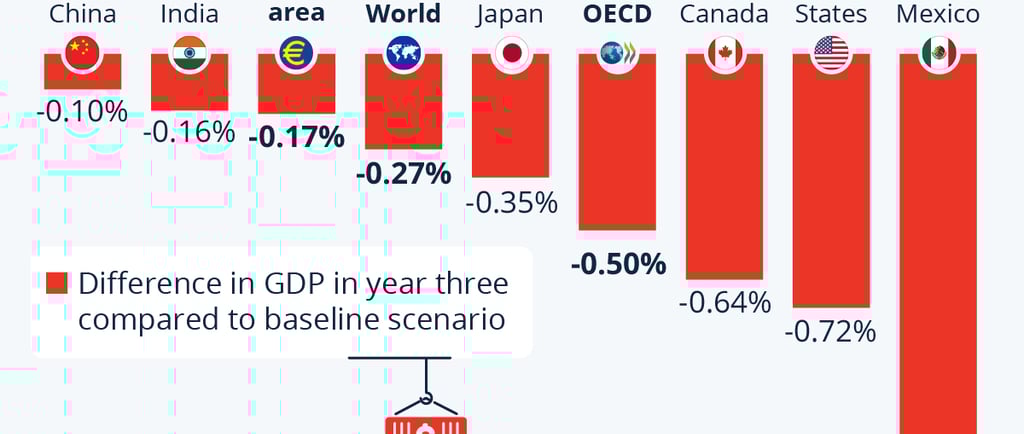
Macro Context (April 2025 - Essentials)
The global economy entered a technical recession in late 2024, triggered by a sharp escalation in US trade tariffs under Donald Trump’s protectionist agenda. Broad import duties led to:
Supply chain disruptions
Cost-push inflation
Collapsing business confidence
A synchronized slowdown in global trade
By Q1 2025, recessionary dynamics peaked. As of April 2025, markets are transitioning into a fragile recovery phase, supported by:
Monetary easing from the Federal Reserve
Fiscal stimulus in Europe and Asia
Partial normalization of global trade flows
This regime favors selective risk-taking, not broad beta exposure.
Asset Allocation Priorities for 2025
Gold & Precious Metals (Core Allocation)
Rationale
Persistent geopolitical risk
Structural inflation uncertainty
Central bank reserve diversification
Falling real interest rates
Gold remains a strategic anchor in portfolios post-recession.
Allocation guide:
7–12% of a diversified portfolio
Sources: World Gold Council, IMF reserve data, Bloomberg
Defensive & Quality Equities (Selective Risk)
Favored sectors
Healthcare
Utilities
Defense & cybersecurity
Infrastructure
Why
Pricing power
Stable cash flows
Lower sensitivity to trade shocks
Geographic preference
US large caps (domestic demand bias)
Japan (yen weakness + corporate reform)
India & ASEAN (structural growth, less tariff exposure)
Avoid
Export-heavy cyclicals
Highly leveraged industrials
Sources: MSCI, BlackRock Investment Institute, OECD
Bonds: Duration Is Back
Post-recession signal
Peak inflation behind us
Central banks shifting from restrictive to accommodative stance
Best opportunities
US Treasuries (intermediate duration)
Investment Grade corporate bonds
Select sovereign debt (core Europe)
Avoid
High-yield credit (default risk lagging indicator)
Sources: Federal Reserve, ECB, Moody’s
Energy & Strategic Commodities (Tactical)
Focus
Oil (geopolitical risk premium)
Uranium (energy security)
Copper (long-term electrification)
These assets hedge re-inflation risk during recovery.
Allocation: Tactical (5–8%)
Sources: IEA, World Bank Commodity Outlook
Cash & Liquidity (Optional Dry Powder)
Volatility remains elevated post-recession. Holding cash:
Preserves optionality
Enables tactical re-entry on market stress
Allocation: 5–10% depending on risk profile
What to Avoid in 2025 for the moment
Over-leveraged growth stocks
Pure globalization plays
Emerging markets highly dependent on US trade
Speculative crypto assets (liquidity-sensitive)
Model Portfolio for the moment (April 2025 - Balanced Profile)
Asset ClassAllocationEquities (Defensive + Quality) 35%
Bonds (IG + Sovereigns) Gold 30% & Precious Metals 10%
Commodities 10%
Cash 10%
Alternatives 5%
Strategic Takeaway
The post-tariff recession environment of 2025 is not a return to pre-2020 globalization. It marks a regime shift toward:
Higher geopolitical risk
Structural inflation volatility
Fragmented trade blocs
Successful portfolio management in 2025 requires:
Resilience over momentum, quality over leverage, and diversification over concentration.
Key Sources
IMF · World Gold Council · Federal Reserve · ECB · World Bank · OECD · BlackRock Investment Institute · Bloomberg
GET IN TOUCH
Have a question, a partnership idea, or want to share your thoughts about finance?
At Financia, we value meaningful connections with our readers and collaborators.
Reach out and let’s start a conversation, your insights could inspire our next article.