

BLOG - FINANCIA
The Hormuz Shock: Markets Enter a New Era of Energy-Driven Volatility
Following the sudden escalation between the United States, Israel, and Iran on February 28, 2026, global financial markets are entering a new regime where oil is no longer just an economic variable, but the central transmission channel of geopolitical risk.
FINANCIAL MARKETS
Mathéo Bockel
3/1/20263 min read
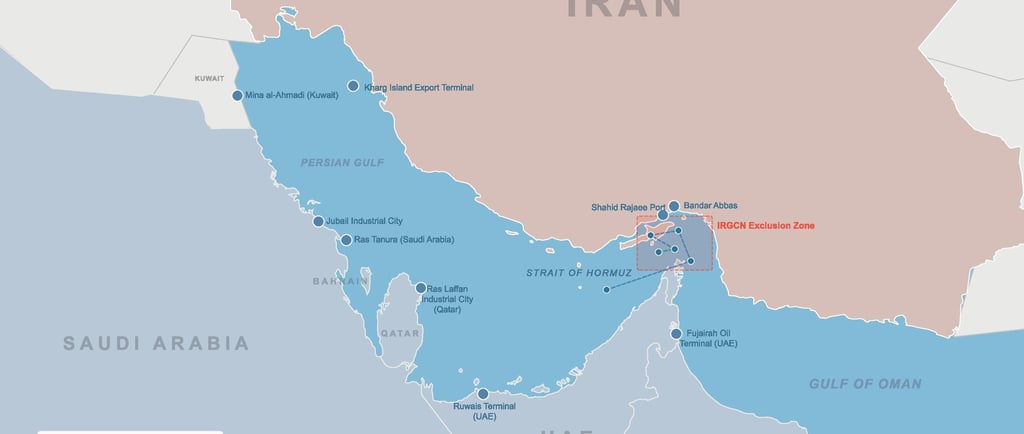
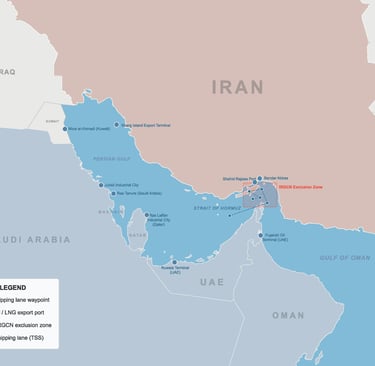
As of March 1, 2026, global financial markets are reacting to what is increasingly perceived not as a temporary geopolitical flare-up, but as the beginning of a systemic energy shock. The joint U.S.–Israeli strikes on Iran on February 28 have triggered immediate fears of escalation across the Middle East, with particular concern focused on the Strait of Hormuz, the single most critical oil transit chokepoint in the world. Even before any full closure materialized, the mere credible threat of disruption was sufficient to significantly alter market behavior. Indeed, Iranian officials had already repeatedly warned of potential action on the strait, a corridor through which roughly 20% of global oil supply flows daily, making it a structural vulnerability for the global economy .
Financial markets reacted instantly to this shift in risk perception. Oil prices surged to their highest levels in several months, with Brent crude approaching the $72–73 range in late February, marking a six- to seven-month high, as traders priced in the growing probability of supply disruption rather than actual shortages . Crucially, this price movement occurred before any physical interruption of flows, underscoring a fundamental change in market dynamics: prices are increasingly driven by expectations of geopolitical scenarios rather than current fundamentals. Volatility also increased significantly, with oil markets experiencing sharp intraday swings driven by news flow around U.S.–Iran negotiations and military positioning . This reflects a transition toward a regime where information asymmetry and geopolitical signaling dominate price formation.
At the same time, cross-asset reactions began to emerge. Safe-haven assets such as gold rallied strongly throughout February, with investors seeking protection against rising geopolitical uncertainty and potential inflation shocks . Equity markets, while not yet in full correction mode, showed increasing dispersion: energy stocks outperformed, while sectors exposed to input costs, such as industrials and transportation, began to underperform. Bond markets also started to reflect rising inflation expectations, as the prospect of sustained higher energy prices threatened to delay any potential monetary easing cycle.
The key structural insight at this stage is that markets are beginning to shift from a supply-driven oil narrative to a logistics-driven risk framework. Unlike traditional oil shocks, such as those driven by OPEC production cuts or demand surges, this emerging crisis is fundamentally about the vulnerability of transport infrastructure. The Strait of Hormuz is not just a conduit for oil; it is a systemic node whose disruption would instantly fragment global energy flows. As a result, even the probability of disruption carries significant pricing power. This explains why relatively modest geopolitical developments in late February were sufficient to generate outsized market reactions: the system is inherently fragile, and markets are increasingly aware of it.
From a macroeconomic perspective, the implications are already being priced in. Higher oil prices feed directly into inflation expectations, particularly through transportation and manufacturing costs. This creates a potential constraint on central banks, which may be forced to maintain tighter monetary conditions for longer despite slowing growth. In this context, the risk of a stagflationary environment, characterized by rising costs and weakening demand, re-emerges as a credible scenario. For financial markets, this represents a particularly challenging combination, as both equities and fixed income can come under pressure simultaneously.
For investors, and particularly for private equity and credit markets, the situation as of March 1 signals a clear turning point. The cost of capital is likely to remain elevated, driven by both inflation expectations and heightened uncertainty. Leveraged transactions become more difficult to execute, not only because of higher interest rates but also because of reduced visibility on cash flows in energy-sensitive sectors. At the same time, volatility creates opportunities for certain strategies, particularly in commodities, energy infrastructure, and tactical trading, but requires a fundamentally different approach to risk management.
Ultimately, what markets are pricing on March 1, 2026 is not yet a realized energy crisis, but the credible emergence of systemic risk. The key shift is psychological as much as economic: investors are beginning to internalize the idea that global energy flows are no longer secure. This represents the transition from a stable globalization framework to a more fragmented and uncertain system in which geopolitics plays a central role in financial pricing. The events that follow will determine the magnitude of the shock, but the regime shift itself is already underway.
GET IN TOUCH
Have a question, a partnership idea, or want to share your thoughts about finance?
At Financia, we value meaningful connections with our readers and collaborators.
Reach out and let’s start a conversation, your insights could inspire our next article.